
By Ken Ball, Director of Service Operations
Fires in high-rise buildings are far more common than people believe, and when the codes regulating these structures aren’t followed, they can have horrific consequences.
In just the past few weeks, a gas explosion in a high-rise in the Bronx injured 17 people and tragically took the life of one resident, and a four-alarm fire in Atlantic City displaced 12 people in an incident described as “organized chaos.”
International Building Codes
When updated safety requirements like smoke control and sprinkler systems are applied, fires are often extinguished before the fire department even arrives. However, when they are neglected, the results can be deadly.
Tech’s experts, like Director of Fire Technologies Casey Bennett, are well-versed in these codes and the processes necessary to correctly apply them.
The most recent International Building Code (IBC) defines a high-rise building as any structure “with an occupiable floor or occupied roof located more than 75 feet above the lowest level of fire department vehicle access.”
The IBC has entire sections covering requirements for buildings that meet these specifications, many of which are drawn from the disastrous 1980 MGM Grand Fire in Las Vegas.
The fire started in the kitchen of a restaurant on the first floor of the casino and hotel, and within minutes it had occupied the entire story, killing 18.
Even more lives were lost on the upper floors, where smoke gathered in the absence of modern smoke control measures. Over 60 guests died between the 20th and 25th floors due to the accumulation of smoke in the halls from the flames below.

Smoke Control
Chapter 9 of the IBC outlines specific measures for smoke control to both direct and mitigate the spread of smoke throughout the building.
Smoke and draft control doors help to keep the spread of smoke from areas of egress while directing it up and outside the structure.
Bennett said the process starts with a rational analysis, in which engineers examine how smoke behaves and determine what systems they need to install to combat it.
“They put together a rational analysis on what the risk is, and how they’re going to mitigate that risk,” said Bennett. “Designing these systems requires complex programming to open and close dampers, close doors, seal off areas of refuge, and pressurize or exhaust spaces to ensure they are tenable.”
Central Controls

Sections 403 and 907 of the IBC also stipulate that high-rise buildings must be equipped with automatic smoke detection, a fire department communication system, and an emergency voice and alarm communication system.
These systems are designed to notify occupants and the fire department in case of an incident. In larger buildings, the local fire department will receive notification of an inceident directly from the building’s communication system.
Smoke detection and alarm systems are also designed to manage evacuations in larger buildings with what is known as floor above, floor below protocols.
“You don’t want to tell the entire building to get out at once, because now it’s a traffic jam everywhere,” said Bennett. “So, what you’ll do is you alert the people most at risk, so the ones on the fire floor, and the ones immediately adjacent to the fire floor are alerted.”
Sprinkler Systems
Along with central controls, the most recent version of the IBC requires sprinkler applications throughout the building, which also means fire pumps are needed to maintain sufficient water pressure.
“You’re not going to have enough pressure through a normal municipal connection to your sprinkler, so you move it through a fire pump so that you can gain enough pressure to push it all the way up that building,” said Bennett.
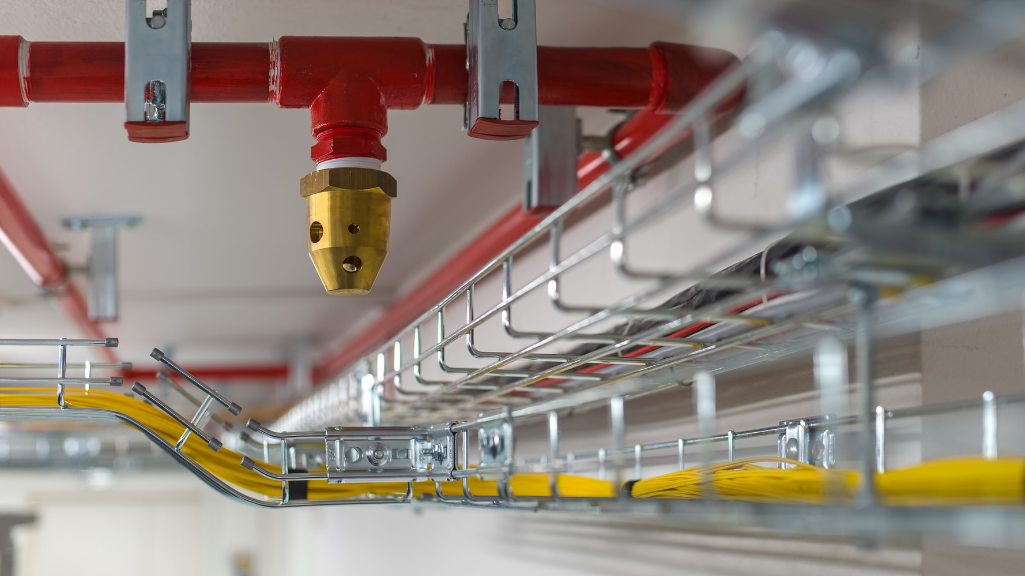
While the IBC requires sprinklers in high rises, many municipalities have omitted or dampened those requirements, among others. These gaps leave room for catastrophic events like the ones mentioned above.
Shifting Regulations
These codes also differ between municipalities, and some cities may require more, or less, than the IBC outlines.
Tech’s Solutions Designers are experts in fire protection engineering and can lend their expertise on code application and system design to any project.
For more information on how to keep your project on the right side of fire code requirements, schedule a consultation.