


Table of Contents
By Rick Nihiser, Fire Alarm Solutions Designer
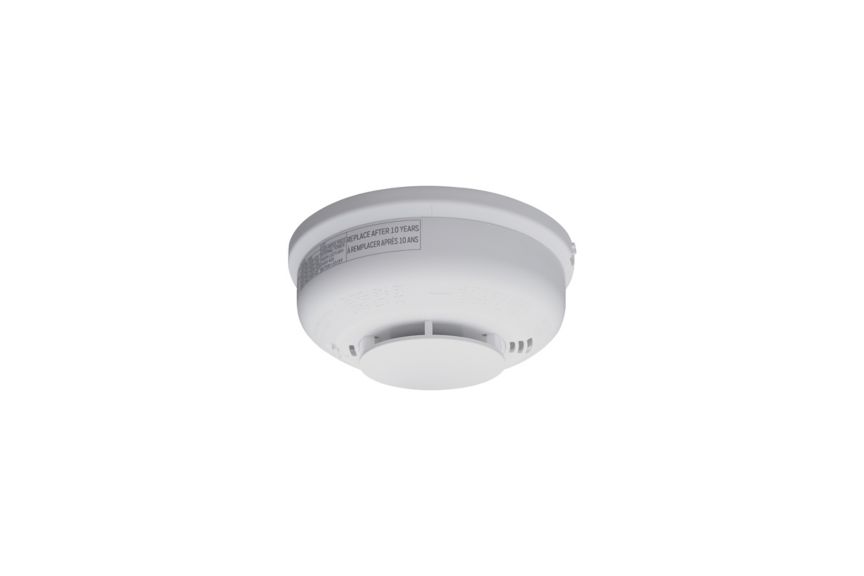
Most smoke alarms in residences are individual devices, but they can be interconnected. They can use either 120 volt AC power or batteries but regardless of their power source, the monitor for smoke in the room and they set off a piercing alarm when they detect it.
Commercial smoke detectors are connected to a fire alarm system and vary widely both in form and function. Most current fire alarms are addressable. The system knows where the fire is and what individual device was activated.
The larger fire alarm ecosystem employs a wide variety of detection devices to monitor for signs of fire, and they are not contained to smoke detection.
Photoelectric Smoke Detectors
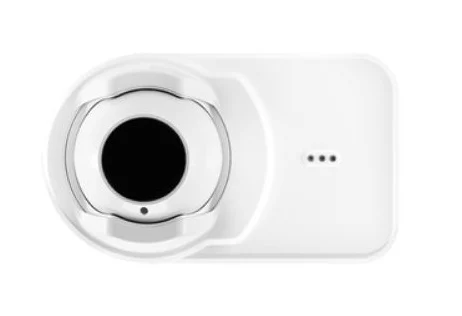
Photoelectric smoke detectors are the intelligent devices found in most buildings. Inside of the device there is a detection chamber along with a sensor that monitors for obscuration.
When a fire starts, smoke enters the detection chamber and obscures its view. When this obscuration reaches a predetermined threshold, the device alerts the fire alarm control panel.
Depending on the device and how it is programmed, it can set off the alarm in the same area as the device, or throughout the building.
Duct Detectors
Depending on local fire codes, the sizes and types of mechanical systems being installed, many buildings also require duct detectors.
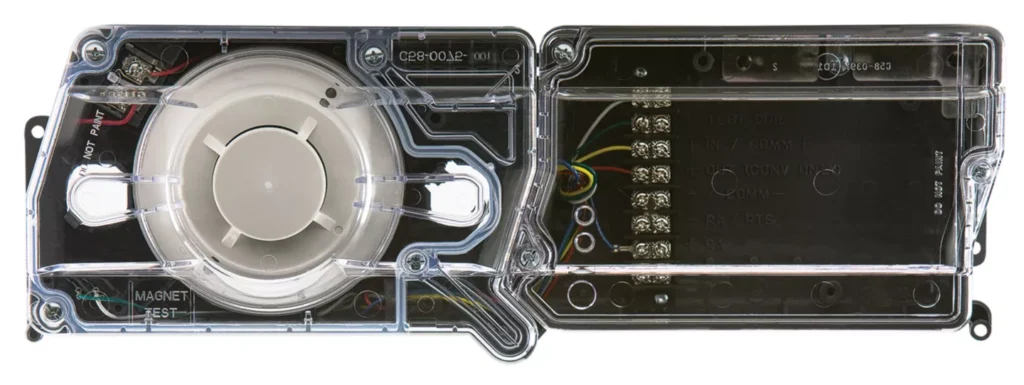
These devices specialize in monitoring low-airflow environments and can be deployed in-plenum above a drop ceiling or attached directly to ventilation shafts.
Those attached to vents use a special housing with multiple configurations to fit the location where they are installed. They use a sensing tube inserted into the vent to direct air into the device’s detection chamber.
Beam Detectors
Beam detectors operate on a similar principle to smoke detectors, using a sensor to monitor for smoke in a given area.
With beam detectors, that area can be far larger.
In large buildings with high ceilings and wide-open spaces like warehouses, beam detectors may be deployed to more accurately monitor the space.
A beam detector is made up of two components mounted on opposite sides of a space. On one side is an emitter sending waves of infrared light across the room.
Smoke disrupts these light waves, and the sensor stops receiving them, alerting the system to a fire.
Since the size of smoke particles can vary depending on the material that’s burning, different wavelengths of light are used to monitor for a wider range of particles.
Using multiple wavelengths provides a more precise reading while limiting false alarms from dust.
These sensors are accurate up to 100 meters and are well-suited for wide-open spaces with fire hazards like manufacturing facilities.
Heat Detectors
Heat detectors are often used in environments where the fire risks may not produce adequate amounts of smoke to alert smoke detectors, or where weather and moisture may present additional issues.
Instead, they monitor changes in temperature from the heat produced by fire.
Heat detectors come in two basic varieties:
- Temperature Detectors
- Rate-of-Rise Detectors
Some devices are also equipped to monitor both conditions.
Temperature detectors monitor for a specific temperature threshold while rate-of-rise detectors monitor for rapid increases in temperature.
There are multiple internal mechanisms used to activate heat detectors, depending on the brand of device being used.
Aspirating Smoke Detectors
Aspirating smoke detectors are the most accurate devices available on the market. They use similar photo sensors to conventional detectors, but instead of monitoring ambient air, conditions are actively tested by the device.
Aspirating detectors “breathe.”
They constantly vent air through the detection chamber to monitor for obscuration from smoke.
With constant monitoring, these devices can detect even trace amounts of smoke, as low as 0.005% obscuration per meter.
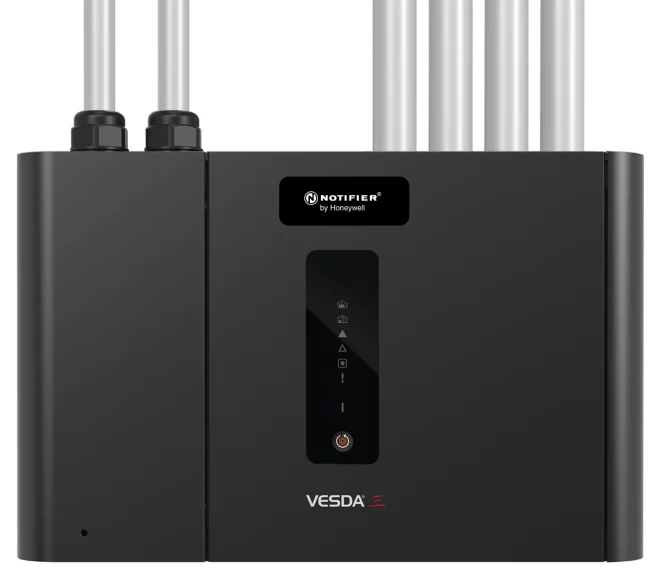
The Very Early Smoke Detection Apparatus, by Honeywell, is equipped with multiple tubes for sampling and filters to limit false alarms from dust and other particles. The device can also be programmed for four different alarm settings depending on the amount of smoke detected.
For more information on these devices, and which ones may be required in your facility, schedule a consultation with our fire alarm specialists to learn more.