By Joe Filla, Solutions Designer
Data centers house thousands of computers and sit on campuses spanning acres. These unique circumstances create an environment that requires very specific fire and life safety equipment.
Building codes require fire and life safety systems in these buildings just like any other, but recent changes in the 2024 NFPA 75 & 76 standards outline specific requirements and best practices for the protection of data centers above and beyond what is required by NFPA 72.
These systems are not only designed for fire protection, but also to mitigate downtime.
Many data centers store valuable data, and when they catch fire, the consequences can be devastating and far-reaching.
When French cloud provider OVH Cloud’s data center in Strasbourg burned to the ground in 2021, the resulting outage temporarily took down over 400,000 websites hosted by the company.
More recently, a data center fire in Hillsboro, Ore. caused an estimated $262,000 in damage and was linked to a seven-hour outage on X.
Data Center Risks
These facilities must be carefully constructed to accommodate complex cooling systems for server racks, as well as massive amounts of power from local grids, backup generators and lithium-ion batteries.
Due to the specialized materials used to keep these facilities humming, they are vulnerable to class A, B and C fires.
- Class A fires involve ordinary combustible materials like plastics, wood, paper, rubbers and other organic fuels.
- Class B fires occur with flammable liquids and gasses like diesel, paint, oil and natural gas.
- Class C fires are any fires in which there is an electrical current present that is actively fueling the fire.
With all these hazards present, data centers require a wide range of equipment from specialized detection devices to complex suppression systems.
Fire Suppression
Traditional fire suppression systems use sprinklers that can release water at a rate of 10-20 gallons per minute. Early Suppression Fast Response (ESFR) sprinklers commonly used in industrial settings can release water at up to 100 gallons per minute.
While effective in other industrial facilities, these systems would destroy millions of dollars’ worth of equipment in a data center.
Most data centers employ some form of clean agent, inert gas or powder solution that is less likely to damage server racks if activated. All three of these systems operate by depriving a fire of oxygen, or by interrupting the chain reaction in flame combustion.
- Clean agent systems primarily use non-conductive and non-flammable hydroflourocarbon foams.
- Inert gas systems operate similarly by displacing the oxygen in a space with inert, non-toxic gas, usually some combination of nitrogen and argon with enough O2 for humans to breathe.
- Powder systems employ powders like sodium bicarbonate (baking soda) or monoammonium phosphate. These compounds are also often found in Class ABC fire extinguishers.
Specialized Equipment
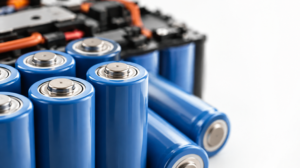
The individual components at the most risk of overheating and causing a fire are computer components like graphics processing units (GPUs) and lithium-ion batteries.
When these items ignite, they can be explosive and flames can travel quickly between server racks.
Fires involving lithium-ion batteries are especially dangerous due to thermal runaway, a self-sustaining process caused by gasses and chemical reactions in the battery that drive up the internal temperature.
These reactions can occur suddenly when a battery fails, and specialized detection systems are required. Prior to thermal runaway, the gasses released by failing batteries are not concentrated enough for traditional flammable gas sensors.
Honeywell offers several industry-leading fire protection technologies which provide early warning of critical fire related events. They enable additional time for response and action to be taken before the event escalates.
- Li-Ion Tamer Gas Sensors Technology are designed specifically for the detection of off-gassing in lithium-ion batteries prior to thermal runaway.
- Very Early Smoke Detection Apparatus (VESDA) is another commonly implemented solution in facilities of this size and complexity. The aspirating smoke detection technology actively gathers air from the space and pulling it into a high-sensitivity smoke detection chamber.
- Thermal Cameras are also deployed to monitor for overheating in the rack level, where traditional detection methods are less effective.
The experts at Tech Electronics understand the specific needs of any facility and will work with you to build a system that will help keep your people and your facility safe, and your operation running.
For more information on how these systems can help your facility, schedule a consultation.